





 ---
--- Peter G. Neumann – A Pioneer of Computer Security
Author(s): BACIVAROV, Ioan
Issue: Volume XV, Issue 1, Year 2026
Peter Gabriel NEUMANN (1932 – 2026) was an American pioneering computer scientist who has spent over five decades warning the technology industry about the dangers of lax security, unreliable software, and systemic vulnerabilities. As a Principal Scientist at SRI International, his work forms the foundation of how modern technology tracks, analyzes, and tries to prevent computer failures. Neumann worked at Bell Labs from 1960 to 1970 and at SRI International in Menlo Park, California since 1971.
Before the RISKS mailing list, Neumann was known for the Provably Secure Operating System (PSOS). Neumann worked with Dorothy E. Denning in the 1980s to develop a computer intrusion detection system known as IDES that was a model for later computer security software.
He edited the RISKS Digest columns for ACM Software Engineering Notes and Communications of the ACM. He founded ACM SIGSOFT and was a Fellow of the ACM, IEEE, and AAAS.
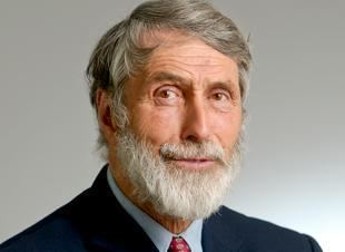
In 1985, Neumann established the ACM RISKS Forum (formally known as the Forum on Risks to the Public in Computers and Related Systems).
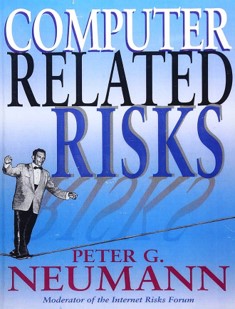
In 1995, Neumann synthesized his findings from the forum into his seminal book, Computer-Related Risks. Rather than just listing computer bloopers, the book categorizes failures into distinct structural domains:
- Reliability: How flaws in software code or hardware components cause catastrophic breakdowns.
- Security: How systemic gaps allow malicious hackers or malware to compromise networks.
- Safety: The physical real-world dangers when critical infrastructure – like medical equipment, aviation, or power grids – fails.
- Privacy: The vulnerability of personal data within poorly structured digital spaces.
- Human Factors: How poor user interface design or operator mistakes trigger technical crises.
Neumann’s lifelong thesis is that security and reliability cannot be retrofitted onto an existing system. He argues that technological infrastructure must be designed from the ground up to be “trustworthy,” utilizing long-term engineering foresight rather than short-term corporate fixes.
He famously notes that the tech industry continuously “tilts at the same windmills,” repeating historic software errors because it fails to learn from past incidents.
The 1990s represented for me a period of international openness, after two decades of scientific isolation imposed by an oppressive regime. I won several European educational and scientific projects, which allowed me to have the status of Guest and/or Visiting Professor at important technical universities in Switzerland, France, Spain, Italy, Great Britain, etc.
During a mobility at the Technische Universität Darmstadt, I had the opportunity to meet Dr. Peter Neumann there, with whom I would later form a beautiful friendship. It is worth mentioning that the Technical University of Darmstadt represented for Dr. Neumann his main point of contact in Europe, being the city where he obtained his doctorate in 1960. At the same time, the Technical University of Darmstadt represented for Dr. Neumann his main point of contact in Europe, being the city where he obtained his doctorate in 1960. Therefore, he periodically visits this university as a guest professor, giving special lectures on computer risks, global network security and secure operating systems engineering.
He was pleasantly surprised when I told him that at the faculty of Electronics and Telecommunications of the most important technical university in Romania – the Polytechnic Institute of Bucharest there is a specialized department in his field – Electronic Technology and Reliability and he appreciated the fact that at our university there are undergraduate and postgraduate courses in the field of dependability (reliability, maintainability, security), where these concepts, including those related to safety / security, have been taught since the 1970s.
We then stayed in touch – unfortunately only electronically -, discussing projects and concepts in the field of computer security and receiving valuable advice for improving postgraduate programs (Master and Doctorate) at PIB / PUB in this important and modern domain. I then invited him – in my capacity of Scientific Chaiman of CCF – as a special speaker at the International Conference on Quality and Dependability (CCF) held in Romania in the year 2002, but – for various reasons – this visit did not take place.
Peter Gabriel Neumann, widely known for friends as PGN, passed away on May 17, 2026, at the age of 93. For five decades, he stood as one of the most prominent, principled, and far-sighted pioneers in computer security, reliability, and digital privacy. He dedicated his life to understanding how computer systems fail and tirelessly advocated for architectures that could make them more resilient. Beyond his towering academic stature, Neumann was celebrated for his warmth, quick wit, and deep love of music. He will be remembered as a structural optimist about research, a fierce critic of corporate shortcuts, and a giant whose work formed the bedrock of modern computer safety.
R.I.P., dear Peter!
Title: Peter G. Neumann – A Pioneer of Computer Security
Author(s): BACIVAROV, Ioan
Publication: International Journal of Information Security and Cybercrime
ISSN: 2285-9225, e-ISSN: 2286-0096
Issue: Volume XV, Issue 1, Year 2026
Section: Books Reviews and Conferences Analysis
Page Range: 94-96
Copyright ©2012-2026
The International Journal of Information Security and Cybercrime (IJISC)
All rights reserved
The International Journal of Information Security and Cybercrime is a trademark of the Romanian Association for Information Security Assurance (RAISA).
No part of this publication may be reproduced, stored in a retrieval system, photocopied, recorded or archived, without the written permission from RAISA. When authors submit their papers for publication, they agree that the copyright for their article be transferred to the Romanian Association for Information Security Assurance, if the articles are accepted for publication. The copyright covers the exclusive rights to reproduce and distribute the article, including reprints and translations.